


Bond Cleaning Rules in Newcastle Under NSW Tenancy Laws
NSW tenancy laws specify what tenants must and must not do, when leaving a rented property. However, many Newcastle tenants unknowingly over clean, under clean or face unfair bond deductions, because they do not completely understand how bond cleaning requirements work. What is usually believed to be a simple chore, can rapidly become difficult when expectations are not properly established.
Understanding bond cleaning requirements is key to protecting your hard earned bond. From knowing what reasonable clean truly means to recognising your rights during the final inspection, being informed can help you avoid disputes and unnecessary costs. This article will walk you through the bond cleaning rules in Newcastle under the NSW tenancy laws. Whether you choose DIY cleaning or quality end of lease cleaning Newcastle services; clarity and preparation are your most powerful allies.
Hide
Show
- Understanding Bond Cleaning Under NSW Tenancy Laws
- What “Reasonably Clean” Actually Means
- The Importance of the Entry and Exit Condition Reports
- Areas Most Commonly Checked During Bond Cleaning
- Professional Cleaning vs DIY Cleaning: What the Law Says
- Allowing for Fair Wear and Tear Under NSW Law
- Handling Bond Disputes and Fair Trading NSW
- Final Tips to Secure Your Bond Refund
- Infographic: Newcastle Tenants’ Guide to Bond Cleaning
- Wrapping Up
1. Understanding Bond Cleaning Under NSW Tenancy Laws
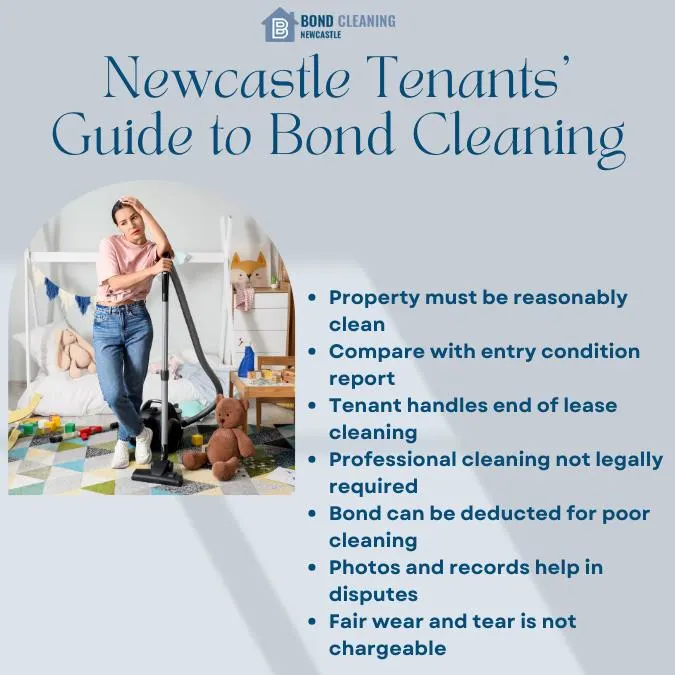
The Residential Tenancies Act 2010 (NSW), requires tenants to return the property in a reasonably clean state at the end of their lease. This means that the property should be free of excess dirt, stains, grease and rubbish, but it does not need to appear unspoilt or newly refurbished. The tenant is not responsible for wear and tear from ordinary use, such as fading paint or worn carpet.
The law also requires that, the condition of the property at the end of the tenancy be compared to the original condition report. This document serves as the primary reference point, during bond assessment. If something was dirty, damaged or worn when you moved in and was documented in the report; the landlord cannot charge you afterwards.
2. What “Reasonably Clean” Actually Means

The phrase “reasonably clean” is one of the most misunderstood aspects of bond cleaning. It doesn’t mean a quick tidy up, nor does it demand professional level detailing in every case. Instead, it refers to a standard that an average person would consider clean and hygienic, considering the length of the tenancy and the condition at the start.
Practically, this includes clean floors, wiped surfaces, grease free kitchens, mould free bathrooms, empty cupboards, and no leftover personal belongings. Dust, cobwebs, soap scum, food residue, and visible stains are usually the primary reasons bonds are deducted. Ensuring that these issues are correctly addressed considerably minimises the probability of a conflict.
3. The Importance of the Entry and Exit Condition Reports
Condition reports play a central role in determining whether your bond is released in full. The entry condition report, completed at the beginning of the tenancy, documents the state of every room, fixture, and surface. Tenants are encouraged to add notes and photos within the first few days of moving in to avoid future disagreements.
At the end of the lease, the exit condition report is compared to the original one. If there are any irregularities, such as extra stains, damage, or dirty areas, the landlord has the option to request cleaning or collect a portion of the bond. Keeping a copy of both reports and taking clear images after cleaning provides strong evidence in case of a dispute.
4. Areas Most Commonly Checked During Bond Cleaning
Certain areas of the property receive extra attention during final inspections. Kitchens are often scrutinised for grease buildup on stovetops, ovens, range hoods, and splashbacks. Bathrooms are checked for mould, soap scum, limescale, and drain cleanliness, especially around showers and toilets.
Other commonly inspected areas include carpets, walls, windows, skirting boards, light fittings, and outdoor spaces like balconies or patios. Any rubbish left behind, even in bins or garages, can result in deductions. Paying special attention to these high risk zones can make a significant difference to your bond outcome.
5. Professional Cleaning vs DIY Cleaning: What the Law Says
Tenancy regulations in New South Wales, do not require renters to hire professional cleaners unless clearly stated in the lease. Nonetheless, the clause must be fair and reasonable. Tenants may clean the property themselves, as long as the end result fulfils the required cleanliness standard.
However, for larger houses or heavily used residences; professional end of lease cleaning Newcastle is usually chosen for convenience and peace of mind. Professional cleaners are aware of real estate standards and understand which areas are likely to be identified during inspections; potentially saving time and lowering the likelihood of reclean requests.
6. Allowing for Fair Wear and Tear Under NSW Law
Tenants are not accountable under NSW tenancy laws, for fair wear and tear caused by normal, everyday usage of the property. This includes minor scuffs on walls, fading paint, worn carpet in high traffic areas and loose fixtures that develop with time. Landlords cannot deduct bond money for these faults even if they become apparent at the end of the lease.
Understanding the difference between damage and wear and tear is essential when it comes to bond cleaning and final inspections. Cleaning is about removing dirt and grime, not repairing ageing materials or restoring the property to a brand new condition. Being aware of this distinction helps tenants avoid unnecessary cleaning costs and confidently challenge unfair bond deductions if they arise.
7. Handling Bond Disputes and Fair Trading NSW
If a landlord or agent claims that cleaning is inadequate and withholds part of the bond, tenants have the right to challenge the decision. You can first attempt to resolve the issue directly by requesting evidence, such as photos or inspection notes. Clear communication often resolves misunderstandings without escalation.
If an agreement cannot be reached, tenants can lodge a dispute with NSW Fair Trading or apply to the NSW Civil and Administrative Tribunal (NCAT). Having documentation, condition reports, invoices, photos, and emails strengthens your case. Many disputes are resolved in favour of tenants when proper records are maintained.
8. Final Tips to Secure Your Bond Refund
- Start early: Avoid last minute rush by beginning your cleaning at least a few days before the final inspection. This allows time for touch ups if needed.
- Use the entry condition report as your checklist: Clean each area according to how it was documented when you moved in to ensure a fair comparison.
- Focus on high risk areas: Pay extra attention to kitchens, bathrooms, carpets, windows, and skirting boards, as these are most closely inspected.
- Don’t forget the small details: Light switches, exhaust fans, inside cupboards, door handles, and power points are often overlooked but can affect inspection results.
- Remove all rubbish and personal belongings: Ensure bins, storage areas, garages, and outdoor spaces are completely cleared.
- Take dated photos after cleaning: Visual proof of the property’s condition protects you in case of disputes.
- Communicate with your landlord or agent: If unsure about expectations, clarify them before the inspection to avoid misunderstandings.
- Consider professional help if needed: For larger properties or tight timelines, professional end of lease cleaning Newcastle services can save time and reduce the risk of reclean requests.
Infographic: Newcastle Tenants’ Guide to Bond Cleaning
Wrapping Up
Bond cleaning in Newcastle doesn’t have to be confusing when you understand what NSW tenancy laws actually require. The key takeaway is that tenants are responsible for returning the property in a reasonably clean condition. Whether you decide to clean the property yourself or opt for professional end of lease cleaning, preparation and legal awareness make all the difference. It can help ensure a smooth handover and a faster bond refund, allowing you to move on to your next home with confidence.